Tag: Malware attack

New EDDIESTEALER Malware Bypasses Chrome’s App-Bound Encryption to Steal Browser Data
News

New EDDIESTEALER Malware Bypasses Chrome’s App-Bound Encryption to Steal Browser Data

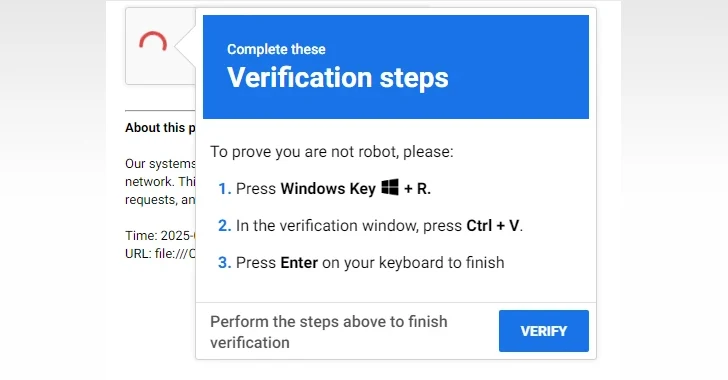
Using the well-known ClickFix social engineering technique, which was started by creating phony CAPTCHA verification sites, a new malware operation is disseminating a brand-new Rust-based information stealer called EDDIESTEALER. According to an analysis by Jia Yu Chan, a researcher at Elastic Security Labs, this campaign uses fraudulent CAPTCHA verification pages to fool users into running a malicious PowerShell script, which then launches the infostealer and harvests private information like login credentials, browser settings, and cryptocurrency wallet details. Threat actors start the attack chains by infiltrating trustworthy websites with malicious JavaScript payloads that deliver fake CAPTCHA check pages that ask users to prove you are not [a] robot by following a three-step pro...
Cybercriminals Target AI Users with Malware-Loaded Installers Posing as Popular Tools
News

Cybercriminals Target AI Users with Malware-Loaded Installers Posing as Popular Tools

The CyberLock and Lucky_Gh0$t ransomware families, as well as a new malware called Numero, are being spread by using fake installers for well-known artificial intelligence (AI) products like OpenAI ChatGPT and InVideo AI as baits. In a report released today, Cisco Talos researcher Chetan Raghuprasad stated that the CyberLock ransomware, which was created with PowerShell, is mostly concerned with encrypting particular files on the victim's computer. With only little changes to the ransomware binary, the Lucky_Gh0$t ransomware is another variation of the Yashma ransomware, the sixth version of the Chaos ransomware series. Conversely, Numero is a malicious software that affects users by altering the Windows operating system's graphical user interface (GUI) components, making the comput...
Fake Zenmap. WinMRT sites target IT staff with Bumblebee malware
News

Fake Zenmap. WinMRT sites target IT staff with Bumblebee malware

More typosquatting sites are being utilized by the Bumblebee malware SEO poisoning operation, which was discovered earlier this week and impersonates RVTools, to infect IT staff devices by imitating other well-known open-source projects. Using the popularity of Zenmap, the GUI for the Nmap network scanning tool, and the WinMTR tracerout software, BleepingComputer was able to identify two cases. IT professionals frequently utilize these two programs to diagnose or analyze network traffic; however, some of their functions require administrative access. Because of this, threat actors target users of these technologies in an attempt to compromise corporate networks and propagate laterally to additional devices. Zenmap[.]pro and winmtr[.]org are the two domains through which the Bumbl...
Hackers Use TikTok Videos to Distribute Vidar and StealC Malware via ClickFix Technique
News

Hackers Use TikTok Videos to Distribute Vidar and StealC Malware via ClickFix Technique

The malware Latrodectus is the most recent to employ ClickFix, a popular social engineering method, as a distribution vector. In a report provided to The Hacker News, Expel stated that the ClickFix method is especially dangerous since it permits the virus to run in memory instead of being written to disk. This eliminates numerous chances for security programs or browsers to identify or stop the infection. Latrodectus is a malware that serves as a downloader for other payloads, including ransomware, and is thought to be a sequel of IcedID. In April 2024, Proofpoint and Team Cymru published the first documentation of it. As an aside, the malware is one of several malicious programs that experienced an operational failure as part of Operation Endgame, which between May 19 and 22, 20...
Hackers Use Fake VPN and Browser NSIS Installers to Deliver Winos 4.0 Malware
News

Hackers Use Fake VPN and Browser NSIS Installers to Deliver Winos 4.0 Malware

Researchers studying cybersecurity have revealed a malware campaign that distributes the Winos 4.0 framework by using phony software installers that pose as well-known programs like LetsVPN and QQ Browser. The campaign uses a multi-stage, memory-resident loader dubbed Catena, which Rapid7 discovered for the first time in February 2025. Security researchers Anna Širokova and Ivan Feigl stated that Catena avoids typical antivirus software by staging payloads like Winos 4.0 completely in memory with the use of embedded shellcode and configuration switching logic. After installation, it silently communicates to servers under the control of the attacker, most of which are located in Hong Kong, in order to obtain more malware or follow-up instructions. The cybersecurity firm highlights...
South Asian Ministries Hit by SideWinder APT Using Old Office Flaws and Custom Malware
News

South Asian Ministries Hit by SideWinder APT Using Old Office Flaws and Custom Malware

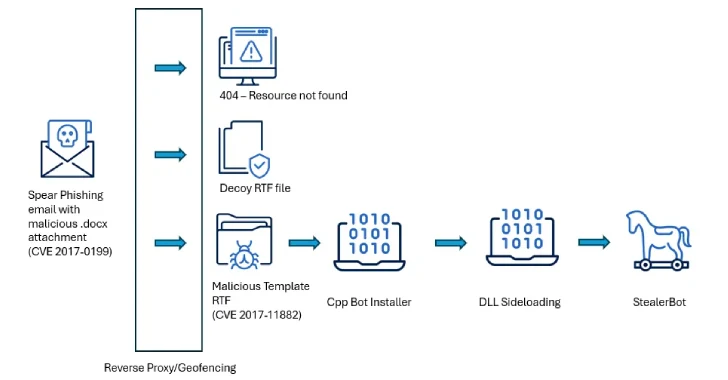
A threat actor called SideWinder has launched a new campaign targeting high-level government institutions in Bangladesh, Pakistan, and Sri Lanka. In order to guarantee that only victims in particular nations received the malicious content, the attackers employed spear phishing emails in conjunction with geofenced payloads, according to a report released to The Hacker News by Acronis researchers Santiago Pontiroli, Jozsef Gegeny, and Prakas Thevendaran. The attack chains use spear-phishing lures as a springboard to initiate the infection process and introduce StealerBot, a known piece of malware. It's important to note that the methodology aligns with recent SideWinder attacks that Kaspersky reported in March 2025. According to Acronis, the campaign's targets include the Ministry ...
Hazy Hawk Exploits DNS Records to Hijack CDC, Corporate Domains for Malware Delivery
News

Hazy Hawk Exploits DNS Records to Hijack CDC, Corporate Domains for Malware Delivery

Hazy Hawk is a threat actor that has been seen using DNS record misconfigurations to take over decommissioned cloud resources belonging to well-known companies, such as Microsoft Azure endpoints and Amazon S3 buckets. According to Infoblox, the compromised domains are then used to host URLs that leverage traffic distribution systems (TDSes) to send consumers to malware and frauds. The threat actor has also taken over resources hosted on GitHub, Netlify, Cloudflare CDN, Akamai, and Bunny CDN. After taking over multiple sub-domains linked to the U.S. Centers for Disease Control (CDC) in February 2025, the DNS threat intelligence organization claimed to have initially identified the threat actor. The same threat actor has since been shown to have targeted additional government insti...
RVTools Official Site Hacked to Deliver Bumblebee Malware via Trojanized Installer
News

RVTools Official Site Hacked to Deliver Bumblebee Malware via Trojanized Installer

An infected installer for the well-known VMware environment reporting tool has been made available on the official RVTools website. RVTools.com and Robware.net are not operational at the moment. In a statement published on its website, the business wrote, "We appreciate your patience and are working quickly to restore service." The only approved and supported websites for RVTools software are Robware.net and RVTools.com. Avoid using any other websites or sources to look for or download alleged RVTools software. The development follows security researcher Aidan Leon's disclosure that a malicious DLL—which turned out to be Bumblebee, a known malware loader—was being sideloaded via an infected version of the installer that was downloaded from the website read more about RVTools Offi...
Horabot Malware Targets 6 Latin American Nations Using Invoice-Themed Phishing Emails
News

Horabot Malware Targets 6 Latin American Nations Using Invoice-Themed Phishing Emails

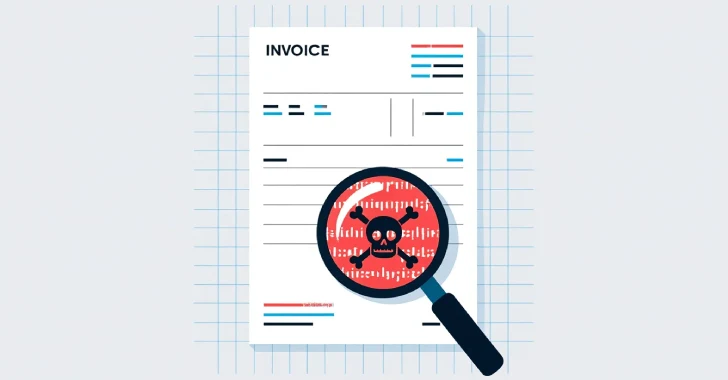
Researchers studying cybersecurity have found a new phishing effort that targets Windows users in Latin American nations like Mexico, Guatemala, Colombia, Peru, Chile, and Argentina with malware named Horabot. The campaign can gather contact lists, install banking trojans, and steal email passwords by utilizing carefully constructed emails that seem like invoices or financial documents to fool victims into opening harmful attachments. Cara Lin, a researcher at Fortinet FortiGuard Labs, stated. The network security firm first noticed the behavior in April 2025, and it has mostly targeted people who speak Spanish. Additionally, it has been discovered that the assaults use Outlook COM automation to send phishing messages from victims' mailboxes, thereby laterally spreading the virus ac...
StealC malware enhanced with stealth upgrades and data theft tools
News

StealC malware enhanced with stealth upgrades and data theft tools

The makers of the popular malware downloader and information stealer StealC have launched its second major version, which includes several improvements for data theft and stealth. In fact, fraudsters had access to the most recent version of StealC in March 2025, but Zscaler experts who examined it recently released an in-depth report. Version 2.2.4 is the most recent of numerous point releases that brought new features and fixed minor bugs in the weeks after it was released. Early in 2023, the dark web saw the rise of StealC, a lightweight info-stealer malware that offered access for $200 per month. Large-scale malvertising operations and hacks that locked devices into unavoidable kiosk settings were observed in 2024. It was revealed in late 2024 that StealC development was st...