Tag: WordPress

WordPress Plugin Exploited to Steal Credit Card Data from E-commerce Sites
News

WordPress Plugin Exploited to Steal Credit Card Data from E-commerce Sites

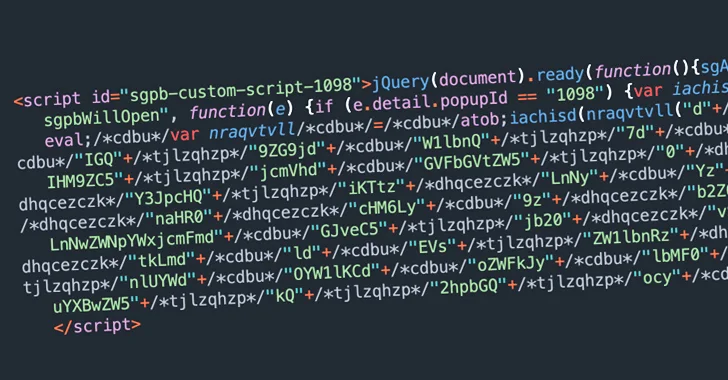
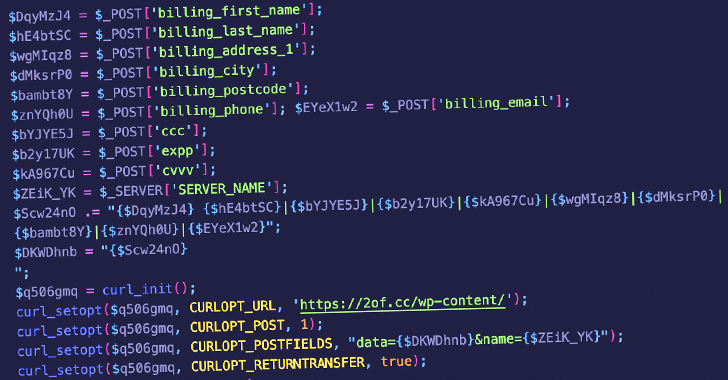
Lesser-known code snippet plugins for WordPress are being abused by unknown threat actors to include malicious PHP code that can collect credit card info from victim websites. Sucuri saw the campaign on May 11, 2024, and it involves the misuse of the WordPress plugin Dessky Snippets, which lets users write custom PHP code. More than 200 installations are still in use. These types of attacks are known to take use of WordPress plugin vulnerabilities that are well-known or readily guessable credentials to obtain administrator access and install additional plugins—legitimate or not—for post-exploitation purposes. According to Sucuri, a server-side PHP credit card skimming malware is inserted into infected websites using the Dessky Snippets plugin to collect financial information read...

WordPress Plugin Alert – Critical SQLi Vulnerability Threatens 200K+ Websites
News

WordPress Plugin Alert – Critical SQLi Vulnerability Threatens 200K+ Websites

With over 200,000 active installs, the well-known WordPress plugin Ultimate Member has a serious security problem that has come to light. With a maximum score of 10, the vulnerability, identified as CVE-2024-1071, has a CVSS score of 9.8. It is acknowledged that security researcher Christiaan Swiers found and reported the vulnerability. Wordfence, a WordPress security company, stated in a warning released last week that the plugin is susceptible to SQL Injection via the'sorting' parameter in versions 2.1.3 to 2.8.2 because there is inadequate escaping on the user-supplied parameter and inadequate preparation on the current SQL query. Therefore, the vulnerability might be used by unauthenticated attackers to append more SQL queries to already existing read more WordPress Plugin Al...
Balada Injector Infects Over 7,100 WordPress Sites Using Plugin Vulnerability
News

Balada Injector Infects Over 7,100 WordPress Sites Using Plugin Vulnerability

Balada Injector virus has infected thousands of WordPress websites that were utilizing the Popup Builder plugin, which was made susceptible. The campaign, which was first reported by Doctor Web in January 2023, uses security vulnerabilities as a weapon and occurs in a succession of recurring attack waves. WordPress plugins that inject backdoors aimed to lead users to compromised sites to bogus tech help pages, fraudulent lottery wins, and push notification frauds. The operation's enormous scope has been made clear by later discoveries discovered by Sucuri. It is believed to have been underway since 2017 and to have compromised at least one million websites during that time. The website security firm operated by GoDaddy claimed to have located the injections read more Balada Inje...
Hackers exploit critical flaw in WordPress Royal Elementor plugin
News

Hackers exploit critical flaw in WordPress Royal Elementor plugin

Two WordPress security teams are reportedly actively exploiting a critical severity issue that affects Royal Elementor Addons and Templates up to version 1.3.78. The vulnerability was used by hackers as a zero-day as the exploitation was discovered prior to the vendor's fix being published. 'WP Royal' offers a website-building kit called Royal Elementor Addons and Templates that makes it easy to create web elements without any coding experience. There are more than 200,000 active installs, according to WordPress.org. The add-on is vulnerable to a bug that is listed as CVE-2023-5360 (CVSS v3.1: 9.8 "critical"), which enables unauthorized attackers to upload files arbitrarily to susceptible websites read more Hackers exploit critical flaw in WordPress Royal Elementor plugin. Sta...
AIOS WordPress Plugin Faces Backlash for Storing User Passwords in Plaintext
News

AIOS WordPress Plugin Faces Backlash for Storing User Passwords in Plaintext

WordPress plugin All-In-One Security (AIOS), which is used on over a million websites, has released a security upgrade as a result of a flaw that occurred in version 5.1.9 of the program and resulted in the addition of user passwords to the database in plaintext. "A malicious site administrator (i.e. a user already logged into the site as an admin) could then have read them," UpdraftPlus, the company that looks after AIOS, warned. If those site managers tried out those credentials on other services where your users might have used the same password, that would be a concern. A danger to the impacted website may exist if the logins for those other services are not two-factor authenticated read more AIOS WordPress Plugin Faces Backlash for Storing User Passwords in Plaintext. Stay i...
Critical Flaw Found in WordPress Plugin for WooCommerce Used by 30,000 Websites
News

Critical Flaw Found in WordPress Plugin for WooCommerce Used by 30,000 Websites

The WordPress "Abandoned Cart Lite for WooCommerce" plugin, which is used by more than 30,000 websites, has a serious security problem that has been made public. "This vulnerability makes it possible for an attacker to gain access to the accounts of users who have abandoned their carts, who are typically customers but can extend to other high-level users when the right conditions are met," said Wordfence, a product of Defiant, in an advisory. The vulnerability, identified as CVE-2023-2986, has a CVSS severity rating of 9.8 out of 10. It affects every version of the plugin, including versions 5.14.2 and earlier. The root of the issue is an instance of authentication bypass that results from inadequate encryption measures being used when consumers read more Critical Flaw Found in W...
Urgent WordPress Update Fixes Critical Flaw in Jetpack Plugin on Million of Sites
News

Urgent WordPress Update Fixes Critical Flaw in Jetpack Plugin on Million of Sites

An automated update from WordPress has been released to fix a serious weakness in the Jetpack plugin, which is used by more than five million websites. The API in the plugin has been there since version 2.0, which was released in November 2012, and is where the vulnerability, which was discovered during an internal security audit, is located. In a warning, Jetpack stated that "this vulnerability could be exploited by authors on a site to manipulate any files in the WordPress installation." To fix the fault, 102 new versions of Jetpack have been made available read more Urgent WordPress Update Fixes Critical Flaw in Jetpack Plugin on Million of Sites. Stay one step ahead of cyber threats with ReconBee.com. Explore our comprehensive coverage of recent cyber attacks, cybersecurity a...
This WordPress Plugin For Elementor Leaves Websites Vulnerable To Hackers
News

This WordPress Plugin For Elementor Leaves Websites Vulnerable To Hackers

Make sure you're utilising this well-known plugin if the WordPress page-builder Elementor powers your website. Because if you are, a recently found security hole makes it simple for hackers to take over your website completely. The WordPress plugin Essential Addons for Elementor is connected to a worrisome cybersecurity problem, according to a recent study from security researchers at Patchstack. Users can create or update their website using a variety of pre-built WordPress blocks and templates provided by the plugin. According to Patchstack's research, "This plugin has an unauthenticated privilege escalation vulnerability that allows any unauthenticated user to escalate their privilege to that of any user on the WordPress site read more This WordPress Plugin For Elementor Leaves W...
New Vulnerability in Popular WordPress Plugin Exposes Over 2 Million Sites to Cyberattacks
News

New Vulnerability in Popular WordPress Plugin Exposes Over 2 Million Sites to Cyberattacks

Following the identification of a security hole, users of the Advanced Custom Fields plugin for WordPress are being recommended to update to version 6.1.6. The problem, known as CVE-2023-30777, is with reflected cross-site scripting (XSS), which may be used to insert arbitrary executable programmes into otherwise innocent webpages. There are more than two million active installs of the plugin, which is offered in both a free and a pro edition. On May 2, 2023, the problem was identified and reported to the maintainers read more New Vulnerability in Popular WordPress Plugin Exposes Over 2 Million Sites to Cyberattacks.